Monday, January 9, 2023

The Ski Lift

Luckily for us, the Feldburg ski lift (“Liftverbund Feldberg”) is repurposed after the spring snow melts. The cable cars lift off-season tourists (like Lynne and me) to the top of Feldberg Mountain, at 4,198 feet, in the Black Forest region of Germany. We expected to enjoy 360 degree views of the southern Black Forest and the Alps from this highest peak in the region. As part of a group of American hikers, mostly over the age of 65, Lynne and I were touring central Europe. Our itinerary promised us a ride to the top of Feldberg in a gondola.

We had started out the day taking an electric train from the small village of
Hinterzarten
. The train was fast, silent, clean, and on-time, giving me a very positive impression of the German investment in infrastructure. A few stops north, our group transferred to a similarly modern local bus. It was already filled with chattering junior high age students, obviously on a field trip. Lynne and I latched on to one of the few empty seats as the bus swooped up the curving forested road, soon leaving the populated area behind. For that short ride, I was immersed in the chatter and activity of this mostly homogeneously white group of German middle school boys and girls. Some shyly peered out the windows, sitting awkwardly in silence. Near me, a group of fashionable girls, one with blue hair, turned towards each other to talk non stop. I sensed a similarity with their American counterparts.

In twenty minutes, the bus pulled up and discharged us all near the base of the gondola, the young students trooping off towards an activity center. The green oblong cable car station was on full view above us. The small cars were suspended in the air from heavy cables. The cables snaked from one pole to another, 1000 feet up the mountain until they reached the distant peak, a dot in our view from the bottom. For now, the gondola area was motionless and silent.


“The gondola is not working,” our cheerful guide, Christian, announced unexpectedly in his accented English. “The conversion from ski lift to gondola has not been completed,” he explained. Christian calmly announced that we would be walking up the mountain instead. Thus began our day’s trek on foot.

We were a surprisingly agreeable group, hearty enough to accept this challenge of extra miles of uphill walking. Indulging in some humor, we cheerfully fell in behind our leader and soon were heading uphill. This turn of events spawned a standing joke as our two week trip evolved. “How much further before we get there?” we would ask, mimicking little children with the “Are we there yet?” question. Sometimes, Christian would scratch his head, and say “Half an hour,” then add with a sly look, “or an hour or two.”

It would be hard to complain about the scenery. We were walking on a well packed gravel path that twisted upward through open grassy meadows dotted with yellow buttercups, lacy white flowers of cow parsley, and purple Penstemon, passing occasional stands of beech, spruce and silver fir trees. We had the trail to ourselves, perhaps thanks to the non-operational cable cars. The elevation gain soon tested our lungs. Not only were we opposing gravity with every step, but we were breathing an increasingly thin atmosphere. Soon settling into a steady pace, our group spread out along the trail. I focused my energy on the physical task of hauling this aging body uphill.


We passed green signs displaying a caricature of a chicken. From the symbols, it seemed that the signs were warning skiers to stay out of the grove of spruce trees. The trees covered a sloping hillside leading down to the valley. After some banter in German between our guide and our local expert, Michael, they explained that the signs were about grouse. Michael enthusiastically jumped in with a ready explanation. Ground dwelling wood grouse are disappearing from Germany’s forest habitat as the grouse are increasingly disturbed by human activity. Among the charming details he shared was the fact that grouse eat small pebbles to help them digest their rugged winter diet of pine needles. When the deep snow fills this area, the skiers arrive, and the nesting grouse come face to face with human activity during the difficult winter season. The human activity disturbs the grouse, which are not elegant flyers. They fly down the hillsides, and have to use precious energy to regain their perches.

The skies had been optimistically blue for the first hour or so of our hike. Soon the skies began to transition to cloudiness. In the distance peaks across the valley, we could also see a threatening dark horizon marked with occasional lightning. Michael warned that storms were predicted for this area. Studying the situation, he estimated that we would have 45 minutes before the bad weather reached us. I noted that we were on an exposed trail with no shelter in sight. En masse, everyone stopped and extracted clouds of green and yellow high tech rain gear from our packs. The clouds intensified over head. Like my fellow hikers, I suited up, dismissed the light drizzle and pressed onwards. The weather became more concerning. The precipitation turned into solid rain, and we could hear thunder approaching. Only the leaders understood that just around the corner was the mountain hut where we were expected for lunch.

 The stone and wood two story mountain hut, (Todtnauer Hütte) appeared just at the right time. The noticeable precipitation turned into a downpour of rain and the breezes became a blustery wind. We raced for the building, where the hostess held open the front door and greeted us with a knowing smile. Motioning us to follow, she led the now dripping group down the hallway to the covered porch. With its high arched glass ceiling, it was a perfectly dry and welcoming place for us to be while the storm blew, thundered and pounded down rain. I enjoyed having a close-up experience of the storm while being protected from it.


Long wooden tables had been set in anticipation of our visit. After taking our seats, Lynne and I peered somewhat helplessly at the menus. They were written in German. With the help of a friend who spoke German, we managed to order:

  • Käsespätzle (cheese noodles with mountain cheese),
  • Hausgemachte Gulaschsuppe (Homemade Goulash soup) 
  • Gemischter Salat (vegetarisch) mit Gurken, Karotten und Tomaten

(Mixed salad with cucumber, carrots and tomatoes.)

 A feast of food soon arrived at the tables. The host family at this mountain hut was from Croatia, and obviously the cook had a way with food. As soon as my plate arrived, I took a photo, in part to honor the lovely presentation, in part to research later what we were eating. We followed up the main meal with universally appreciated Apfelstrudel (apple strudel), which came on a platter framed with whipped cream. By the time the storm let up, we were well sated.


The group chose to continue to the top of the main peak, the Höchste or "Highest" of Feldberg, at 4,898 feet.  We could see it in the distance from the hut. Picking up our packs and setting out on the increasingly narrow dirt track, we made good use of our hiking poles as it got steeper. My focus was on careful foot placement as the trail got rockier. Before long, there we were, higher than everything else around us. Finally looking down from above, the mountain hut appeared in miniature below us, and the gondola was hidden by the trees at the base of the mountain. The trail we had just followed was indistinguishable in the large sweep of meadow grasses. We could gaze at distant mountains, but it wasn’t clear enough to see the Alps. The guides gave us time to linger, absorbing the expansive view. Other than human banter, the only sounds were the voices of the wind. With the group, I shared an experience of awe amidst the geologic grandeur of Feldberg, a feeling I savored as we soon headed down the mountain, step by step.

Western capercaillies, also called wood grouse, are Europe's largest chicken birds. They are not elegant fliers due to their body weight and short, rounded wings. While taking off they produce a sudden thundering noise that deters predators. Because of their body size and wingspan they avoid young and dense forests when flying. While flying they rest in short gliding phases.

 They are considered very shy, live only in untouched mountain forest regions and are seriously threatened with extinction. They have long been part of the classic Black Forest myth of largely idyllic and intact nature

 If you want to know more, here’s a good site: Overview  of capercaillies

 This amazing story reflects the reality of humans interfacing with grouse: “The last grouse” story from the NY Times

Here’s a link to the mountain hut where we ate lunch: Todtnauer-huette. You can see the menu yourself and test your German!

 This Wikipedia article explains “mountain huts.” Mountain hut


"When I Die" by Sky Hedman


Being one who lies awake outlining the various future catastrophes that my life might encounter, I decided today to instead visualize some Hollywood moments where I would be filled with everlasting joy.

Of course, one universal specter that I worry about is “How will I die?” Not actually my moment of death, but the period leading up to it. To be fair, I also worry about the time after my death: Will Lynne be ok? If she isn’t alive, would my pets be taken care of? This follows my anxiety about being lonely as I age, being alone, or worse yet, being in a facility with understaffed and overworked aides and nurses, and no pets

 OK, I am not going further with the details of these fears, all of which could easily happen, and most likely will happen. Instead, I am going to create a glowing vision of the future. 

It will start with me being in perfect health until the moment I die. I will be energetic, I will be physically rigorous. I will hear perfectly and see better than I do now. I will still drive and dress myself and feed myself. Of course, I will have plenty of money to sustain my lifestyle, so no worries there. The economy will be so strong that the city, the state, the country and the world will be prosperous. The oceans will be free of plastics. OK, maybe this dream is getting too big, but you know what I mean, the world will be in such a state that I don’t have to worry about it, even if I end up in a long term care facility.

But wait, I am the creator of this future. I will not be in a long term care facility. I will live in a friendly neighborhood where I know my neighbors and children and their dogs. I will look at a pleasant view out my window, like the one I have now, where I see Bellingham Bay and Lummi Island and Orcas.

Right, so I don’t need to create that for the future. I already have it! It’s just, can I stay here as I age? Which of us will die first, Lynne or me? I know I am in fantasy mode, so I could draw the future such that we both die at the same time! Neither of us will live through broken hearted loneliness that would come with being the surviving partner. I could include an option for being the widow, but I wouldn’t have crying jags, tears down my cheeks, rocking back and forth in grief, because I would have researched healthy ways to grieve and I will be following the directions to a T. And I wouldn’t be afraid at night by myself, because…I would be a different person! I’m the author here, I remind you. I’ll be filled with gratitude for the great life Lynne and I lived together, and I will be consoled by memories.

 This future would be positive for all of us, and we would all let go of our fears of the future. “No worries” would be the honest truth. I would continue to wake up every morning full of optimism. All until the day I die. And that day would be typical of every day in our world. Days of having enough: enough food, warmth, companionship, views, cute dogs, music, aspirations and lived dreams.

 Oh yes. I forgot the detail of how I would die. I would receive a vision that my final day was coming. I would pull out my detailed plan about who should be notified, who would take my pets, who would empty the house and all that. I would listen one more time to YoYo  Ma. I would already have bequeathed my cello to a deserving student. People would care that I’m gone but they would have a warm feeling in their hearts and smile when they think of me and my magical powers to bequeath an ending that is happy to everyone.

 Full, well paid employment for caregivers!

Supportive, compassionate homes for all children and pets.

Sunlit days alternating with needed rain.

Healthy trees filled with an abundance of birds.

Fresh air in all directions.

Hands to hold.

Songs to sing.

Love to overflow in each heart.


Tuesday, June 28, 2022

Brown Swiss


May 18, 2022 

What surprised me about the deep gong of the cow bells was that each one struck a different note. The effect was a heavenly chorus ringing in my ears as I walked along the gravel path next to the mountain pasture in the Bregenzerwald area of Austria. The cows were intent on grazing, first grabbing mouthfuls of fresh green grass, before shifting their weight, one hoof, then another, to focus on a fresh patch. My spirit rose, each sound ringing out in the gentle breeze. It mixed with the raven’s calls in the wind, fading into the expansive backdrop of verdant pastureland, forests and distant mountain peaks.

This herd of cows was utterly unconcerned with our presence. At first, we came upon ten or fifteen of them grazing. As we climbed higher, we encountered more in the herd of fifty, dispersed in the forest and upper pastures. Our group of eighteen tourists were not a distraction to these massive beings, who appeared bigger and longer the closer we came to them. They dwarfed me, reaching to my shoulder height and seemingly as long as a compact car. Most were a mocha brown color, with an elegant silky hide, and each had overfilled udders protruding like basketballs between their hind legs. With their heads down, a bell harnessed by a leather strap around their neck, and a short length of chain dangling under their chins, they pursued the daily groove of a dairy cow sustaining herself. To me, it was a gift of beauty from another century, a precious moment. There were no other sounds except our booted feet scuffing the gravel as we followed the modest driveway a thousand feet up to the farmhouse.


The cows had recently migrated to the summer pasture, called “alm” in this area of Austria. Spring weather and the melting of the snow had signaled the move from the valley below to this higher elevation, a historic practice called “transhumance”. This higher altitude pastureland--at 4000 feet--was subalpine, with cultivated pastureland among the mountain forest. Here we (and they) were removed from human-generated wearying sounds: cars driving by, tractors in the distance, train whistles or airplanes overhead.

Our group of American tourists, Lynne and I included, all surpassed sixty five years old. We were following the French tour guide, Christian Fuhrmann. The evening before, he had led us on paths and lanes through the lower farms in the village of Lindenau. Each farm in the valley was a bustle of activity, as the farmers (mostly men) were shearing the foot tall grass with hand scythes and mowers. This labor-intensive process was the first step in harvesting the grass for storage in the barn until winter. Raising cows on grass in this pristine area, with clear water and clean air, and then harvesting their milk to make cheese, results in cheese valued in the market place for its quality and distinctive taste.


Now in their summer pasture, the herd of gals slowly makes its way to the milking barn at the top of the pasture land, walking with surprising grace for 1400 pound animals with udders full of milk. Before entering the barn, a few at a time, they vie for a long drink at the wooden water trough. There a simple pipe suspended over the trough supplies a continuous steam of cold, clear water. Later, I filled my water bottle from the same pipe.

The shady milking barn was fitted with individual stalls, and each stall had mechanical equipment that I, a suburban person, supposed were the milking machines. The pipes running around the periphery delivered the milk to the adjacent cheese making room.

Each of the fifty cows had a name in addition to its distinctive bell. Christian repeated a story about the ten year old son of the cheese maker. One evening, he was sitting at a table doing his homework when the cows were gathering at the barn to be milked. The flow of cows ended, but the boy looked up and said, “One is missing,” and named the cow. The farmer went out to find the cow, just as it crested the hill and wandered into the barn.

Milling around between the house and a rock wall graced with various shades of purple phlox, our group met the female farmer. Between our guides’ introductions, and answers to our questions, we learned more about her.


The farmer, Tina, was shy, but friendly, as curious about us as we were about her. With short graying hair and a stretchy gray top over her ample bosom, she wore simple black shorts and Birkenstock sandals. Her work was milking cows twice a day, seven days a week and making the cheese daily. In addition, each day she flipped every wheel of cheese that is aging in the expansive storage room.


We struggled to learn the breed of these cows from the German-speaking farmer. She answered our French-speaking guides, who then translated into English. The first answer was that these were “brown” cows, a seemingly obvious tag that could apply to many cows around the world. The hides of these cows had a light brown sheen, almost a cashmere appearance, more elegant and distinctive than the brown and white cows that I knew from my childhood. Their horns had black tips. After further conversation in German to French to English, a better answer surfaced. Many of these, but not all, were Brown Swiss cows.

“How did you come to be a cheesemaker?” we asked her. She looked straight at us when she answered in German. Then the guide translated. “Her father told her that she had to take this job after her uncle died.” As a female cheesemaker, she is in the minority. She has the help of two teenaged relatives, a girl and a boy, who volunteered to move up here for the summer, with the bonus that they are excused from school during the summer pasture season.

“Do you have internet?” one of us asked. Tina responded immediately, “Yes, the children wouldn’t come up here without it.” Tina also speculated that she didn’t think that the next generation would take on this work.

Tina has been tending cows and making cheese for 23 years, in addition to mothering her children. Her husband works at a separate occupation. She starts making cheese at five am every day, way too early for American tourists tucked in their hotel rooms in the valley below to witness. She agreed to tell us about the milking and cheese making process, so we gathered inside the building. One end was the house, the other end was the barn, and the cheese making kitchen and cheese storing room were in between. The cheese making room, adjacent to the milking barn, was sunken to basement level and rose two stories tall, with a balcony halfway up at the home level.

There I stood, leaning on the wooden railing, looking down at two gleaming, over sized copper vats which received the milk from the cows in the barn. Stainless steel countertops lined one wall lit by sun filled windows. Earlier that day, like every day, she had turned the fresh milk into four rounds of white cheese. The long paddles, sieves and scales hanging from the wall gave a hint of what was required.

Today’s cheese was already sitting in a cheese press, each round covered in cheesecloth. A single wheel seemed about two feet in diameter and six inches thick, weighing about 77 pounds. It was so heavy that when she raised up the cheese cloth from one edge, and deftly flipped the wheel over on the stainless steel counter, it landed with a loud THUMP which startled everyone in the large room. She tightened the circular wood form shaping the wheel of cheese, before returning it to the cheese press. By the end of the day, the new wheels of cheese would be rolled to the adjacent cold storage room.


Outside the house on a wood picnic table, Tina put out a wheel of her aged cheese for us to sample. Now covered with a yellow rind, this hard cheese was about six months old. My mouth filled with its full, rich, tangy flavor, still lingering in my taste buds as we took our leave and started walking back down the mountain.


I chatted briefly with Lynne, then I fell behind in order to take more photos to add to the many pictures I had already taken. Eventually I walked silently. I felt that I had glimpsed a truly different space, one free from the cacophony of urban living noises and distractions that make up a typical day for me. I could see the amount of arduous labor required to keep up this regional tradition. I could sense the isolation that was also the beauty of the summer pasture. I was grateful for this experience. 


***********

Facts:

Alpine transhumance: seasonal migration to high mountain pastures (Alp, Alm)

Braunvieh cow, a breed of domestic cattle originating in Switzerland and distributed throughout the Alpine region. It falls within the “Brown Mountain” group of cattle breeds. In modern times, it is primarily a dairy breed. Average female with is 610 kg. Female 135 cm. The American Brown Swiss makes up 75% of genetics of the Swiss Braunvieh. Brown or grey-brown in color. Nose is black and encircled by a pale ring. The horns are pale with dark points. A female cow produces between 7200 and 12,000 litres per year.

Bregenzerwalder Kasekeller opened in Lingenau in 2002. More than 32,000 cheese wheels are stored for aging in this cheese cellar. It was an initiative of the Kasestrase Bregenzerwald, to preserve small-scale agriculture and the diversity of local products in the Bregenz Forest, and to support Vorarlberg’s cheese culture.

The cheese made from the summer pasture: Alpkase, Voralberger Bergkase

Cheese made from winter pasture (beginning of October to end of May): Bergkase

 The Bregenzerwald Umgang “Bregenzerwald Walking tour”

 Lingenau, in southwest Austria:

Population 1,466 in 2018

Elevation  2,247 ft

Sunday, October 3, 2021

Antidote

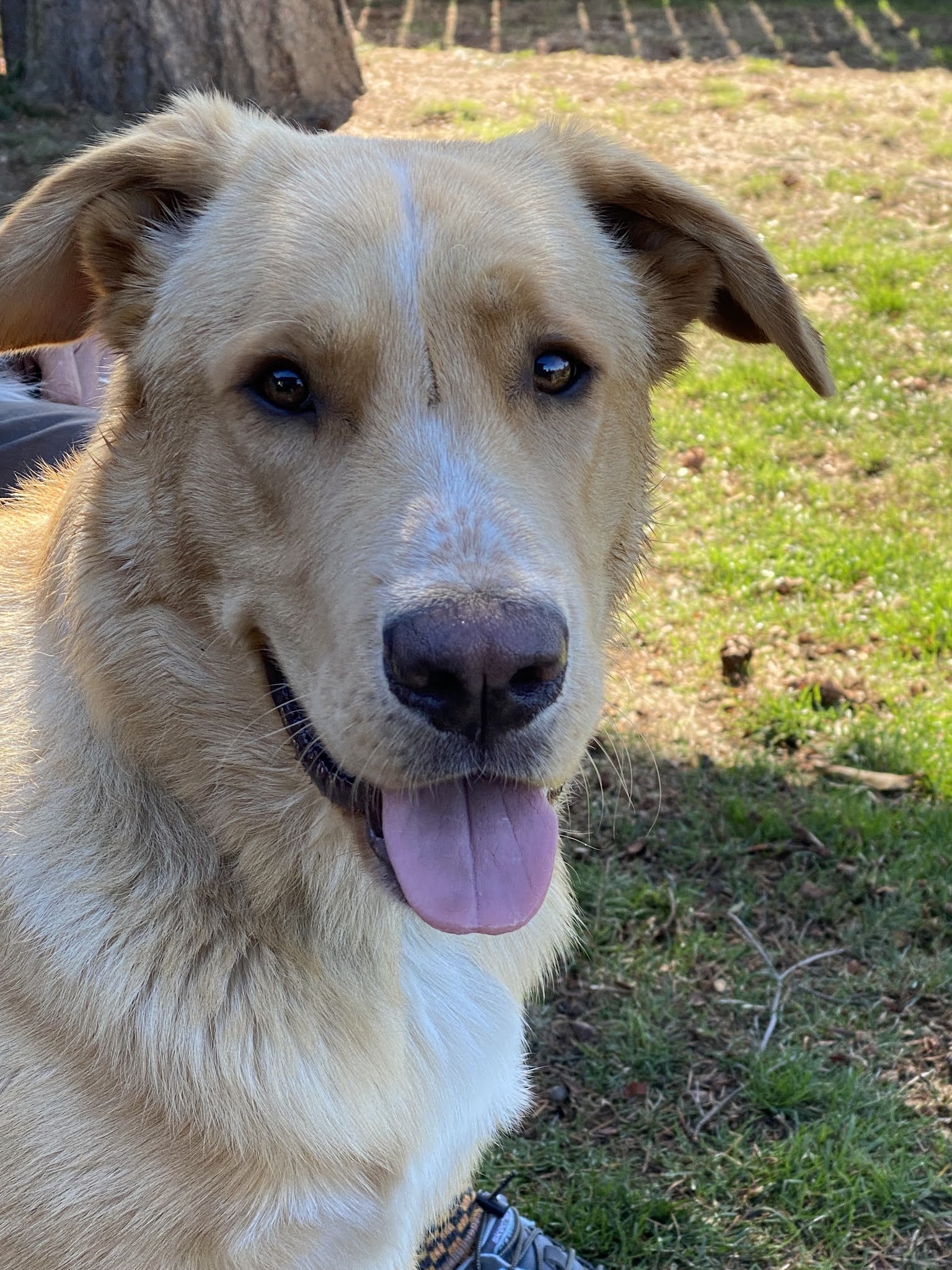
I experience a softening in my heart just from his head resting on my foot. He’s an oaf now, walks on stiff legs like a Tennessee Walker horse. When he trots, his ears bounce on either side of his enormous head. This young puppy gallops when he reaches top speed—way too fast to keep up with on a leash. We make frequent use of the spacious off leash area of Whatcom Falls Park, a special opportunity for him to really stretch his legs and for us to enjoy the woods. Our front yard, with grass already struggling to flourish under our big Douglas Firs, is beaten down daily. The shrubs have been pruned by this guy, who is to be excused for his constant chewing. He’s so young we count his age in months, eight of them. Our boy gives an extra hop when he wants to play. A moment later, he studies the ant crawling on the pavement.


“His name is Anders,” we say, then explain that a friend who saw a photo of him soon after we got him from the shelter said, “He looks like Anderson Cooper.” Its true Anders has a serious expression, brown eyes that hold a steady gaze. His short cropped hair is marked with a stripe of white like the famous newscaster. Mostly people laugh; some say “The silver fox!” We joke that the name Anders also fits because my grandfather was Swedish. When people pronounce his name “Ahnders”, we don’t correct them. After all, he has Scandinavian heritage.

The paws of Mr. Puppy are so big that they are conversation starters—complete strangers cheerfully offer “Look how big his paws are!” or “He’s going to grow into those paws!” Those feet are bigger than those of any dog we have had, or might have seen, even though Lynne and I have had seven previous dogs in our 43 years together. At six months, Anders’ paws were bigger than mine (my human hand), and the pads are as thick as rubber tires. Now at eight months, we consider his ever increasing paws one of the wonders of the world. He curls them tight to his chest when he lies down.

The large, blue plaid and fleece dog bed from Costco that our generous friends gave us when we got Anders is now too small. When Jerri and Lynn first carried it ceremoniously up our front walk, I blurted out, “That’s huge! He’s just a little puppy.” At the time, Anders was ten weeks old and he weighed six pounds. Now, at eight months, he is 63 pounds and falls in the category of “large breed." I used my spreadsheet skills to create a growth chart for him—age on the x axis and weight on the y axis. For seven months his numbers showed an unrelenting upward climb. We swear that he is bigger every morning than he was when we went to bed. Only recently has the line started curving, suggesting that his growth rate slowed. This runt who had been turned into the Humane Society near death grows steadily larger day by day, fueled, no doubt, by the constant intake of premium puppy food.

 Anders has a personality unique to himself. Our biggest worry with him is not running away, but lying down. If he lies down, in the front yard after dark, for example, or in a neighbor’s front lawn during a walk, he won’t budge. Neither coaxing, sweet talking nor issuing stern commands have any effect. Luring him with treats is useless. We assume he trained in Gandhi’s nonviolent resistance concepts before turning up at the Whatcom Humane Society. Here’s our technique in response: I scoop under his belly and raise up his hind quarters, a somewhat athletic challenge for me at age 70. Then he gathers up his front legs, at which point I push from the rear and he starts moving forward. Lynne and I prefer to resort to this maneuver when no one else is looking, so we don’t end up going viral on YouTube.

 If Anders has one deficiency, it is his seriousness. He is not affectionate in the way of spaniels or poodles or most other love bugs. Our dog does not always greet us at the front door when we return home. “Anders,” Lynne says when she finally locates him in the house, “a tail wag lets us know you love us.” He looks up, raising his hard head from where he is sleeping, and gives a few faint wags before resuming his slumber.

“We might be too old for this,” Lynne and I agree. At ages 73 and 70, we are no match for his power when he spots a rabbit on one of our daily walks. Falling flat on the pavement with one outstretched arm attached to his leash is not the outcome that either of us would choose, so we have sought advice from friends and YouTube videos, as well as dog trainers. We tried a regular collar, a fancy martingale, a slip collar, a vest harness, a harness that attaches to the leash on the top, and a harness that attaches to his front, all with basically imperceptible improvement. Two things have worked to keep him from pulling: bribing him with treats, and using a prong collar, which seems to convince him to slow down.

Lynne and I have had a much easier time with the chewing issue, thanks to advice from others. From the day we brought him home, friends have given us a motley and somewhat exotic array of chew toys: rubber kongs, non-meat venison sticks, bully sticks (bull penises, very expensive), Himalayan cheese sticks, soup bones, antlers, and the best of all: beef kneecaps. Little did we know that an industry has blossomed around keeping our pets from chewing our shoes.

By the way, Anders now has four dog beds, and we just ordered a bigger one, size Extra Large. Also delivered to our door this week: the dog swimming pool. His treats, an array of tasty morsels that sit in non-recyclable plastic zip lock bags in one corner of our kitchen, include Trader Joe’s Charley Bear Dog Treats with beef liver, miniature Milkbones, heart shaped lamb treats, salmon bits and lamb flavored dry kibble, for the cat, to keep her from eating the lamb flavored dog kibble.

 In this time of the COVID pandemic, economic turmoil, the rise in homelessness, Black Lives Matter demonstrations, Me Too allegations and rabid right wing challenges to democracy, why do I write about our new puppy? Raising a puppy has its benefits as well as its challenges. He's a charmer, and Lynne and I keep each other apprised of his latest cute pose. Our social life has improved, as promised by one of the raising a puppy books we read. Taking him for daily long walks has vastly improved our connection with our neighbors, whose first names we are learning after living nearby for 12 years. We learn their dog's names also, and frequently set up play dates for Anders. We spend more time outdoors in all kinds of weather, and more time at the lake or nearby rivers where he loves to splash around in the water. I've taken to thinking of him as my personal fitness trainer. At home, we also have a private kind of puppy fun in our old age, despite the odds. It is a primal joy to see him galumph around the yard squeaking with his toys, shaking a knotted rope, or wrestling with dog pals. At the end of the day, we are content when he sits on our feet. Loving a puppy is a compelling force, an antidote to all that isn’t working.


Tuesday, May 28, 2019

Remembrance

A cloudless night with a full moon. The surprising white light, high above, outlines the trees and the buildings, reflects off the water, makes jazzy designs on the gentle waves. A night that makes you look up, and feel expansive, feel awed by natural beauty, feel peaceful, feel connected to people far away. A soldier in the south of England might think of his home on the opposite shore of the Atlantic Ocean, a home he left six months ago. A place with a family that he might never see again.

Low tide at dawn. Waves landing and then sucking away from the shore, drawing pebbles and sand back into the English Channel with each cycle. The sandy beach widening, the cliffs moving further away from the water’s edge. In the early hour, few souls awake to witness this moment.

Calm seas. Looking across the greenish blue expanse from England, the horizon disappearing into the sea, the coast of France too far away to see. The sight is soothing in good weather, sobering in a storm.

Coast of Normandy, France, looking east towards Omaha Beach
A long day of sunlight.

Thanks to the northern latitude, early morning light touched my eyelids at 5:20 am this morning. No darkness will signal day’s end until almost 9 pm. The coastline in Normandy, France, is almost the same latitude as our home in Bellingham, Washington.

Seventy five years ago, General Dwight Eisenhower was in a trailer in southern England contemplating stormy weather and deciding when to invade France. The Allies had drawn up a 700 page plan that included split-second timing defined for every phase. Success depended a full moon, a low tide at dawn, calm seas, and a long summer day.

June 6, 1944 has been called “The Longest Day.” The invasion ultimately succeeded, but the price was the loss of many human lives. When I try to put into words why this story is so compelling to me, I falter. I am not generally interested in military history. I picketed and marched against the Vietnam War. I am not in favor of solving differences by going to war. Any trauma that I have experienced has been personal, in shades of hurt or discrimination or loss. I think of death in terms of one person at a time: one brother, one friend, one mother. I have limited experience with physical violence. I have never been in an army and I have rarely been part of a team.

Maybe because of this, the first hand accounts that I read touch my heart. I hear about paratroopers who are dropped from their planes after midnight many miles off course, sometimes into marshes or the English Channel. Although the moon was full, the clouds obscured landmarks and pilots lost their way. The storm in the English Channel resulted in rough seas. I read about young men who followed orders to step off their landing craft even though their buddy or their commander was just shot. I read about soldiers directed to ignore cries of help from their fellow soldiers in order to complete their missions. I read about amphibious tanks and their crews that sank in five foot waves. This is the story that has grabbed my attention and stirred my soul. Young men placing themselves in the line of gunfire and likely death. Inexperienced soldiers struggling to stay alive on both sides. Terror as the German defenses wiped out the first wave of American soldiers. Horrifying images of dead bodies on Omaha beach. Bodies left at sea. Many missing in action. Leaders lost, troops re-grouping.

On our recent trip to France, I also heard personal stories of the toll that the Occupation and invasion had on the people of Normandy, and on the German soldiers. For four years, the French people who lived in Normandy had been controlled by the Germans occupying their towns and the coastline. Their sons were sent against their will to Germany for Obligatory work service. The German soldiers assigned to Normandy were often as young as fifteen. Many of the German soldiers were poorly motivated prisoners from the countries that Germany had invaded, given a choice between joining the German military or prison. All but three cities in Normandy were destroyed by the Allied bombing.

Normandy American Cemetery, France
When we went to the American Cemetery in Normandy, I found what I had expected and more. Nine thousand graves, each marked with a white stone cross or a star of David, and the name of the soldier, when known. The cemetery is above the English Channel. The experience was somber but also scripted, from the recording of Taps to the uplifting quotations on the walls. Visitors, old and young, meandered across the grassy expanse and back to the parking lot. On the spring day that we were there, the birds serenaded us, the breeze refreshed our skin, and we had to be back at the bus in an hour.

The La Cambe German cemetery was ten miles down the road and not far from Omaha Beach. Where the American Cemetery was populated with 9,000 white markers, the flat grave markers in German cemetery were in natural stone. 20,000 German soldiers were buried there. Each gravestone marked the body of two fallen German soldiers. Their birth and death dates were engraved below the names. We could easily calculate that many of the soldiers died before the age of twenty. It was here that our French guide spoke more personally about her family history than she had throughout the three days we had spent with her. “We must distinguish between Germans and Nazis,” she told us.

La Cambe German Cemetery, France
The story of D-Day has been told and re-told in countless books and movies, although not necessarily over the dinner table. The part of this long story I want to tell is of the great human tragedy that unfolded on D-Day. It was part of a massive human effort to stop the horrors that Adolph Hitler and his forces were inflicting on the people of Europe. The Allies did succeed with time.

This story was not told to us by our fathers. Their story is also one of silence and return to normalcy. “We did what we had to,” our fathers said, if they said anything at all.

In this week between Memorial Day and June 6th, 75 years since D-Day, I reflect on loss and horror. My heart goes out to both those who were lost and those who survived D-Day. Your story is alive in me.

Sunday, August 26, 2018

Ten Things About Iceland


Gullfoss
It's a country where you can safely drink out of any stream. It has about 500 earthquakes per week. All the sheep are free range. It was #4 on the 2018 Happiness Index.

We went to Iceland on a Road Scholar hiking tour of southern Iceland for a week this summer (2018.) I was not expecting it to be so different, so intriguing. I was wondering what it would be like to be so far north.

Here’s some of what I came away with.
One of our guides, Ásdís Birgisdóttir 

1.  Who Lives in Iceland? There are only 350,000 residents of Iceland, almost all of them living in or near the capital, Reykjavik. (The least populated US state, Wyoming has 573,000 people.)

There are 4.5 million visitors each year. Tourism is Iceland’s number one industry.

The entire country is smaller than the US state of Kentucky.

2.  Geothermal heat The North American tectonic plate and the Eurasian tectonic plate meet, or actually, almost meet underneath Iceland. The two tectonic plates are drifting apart, causing a rift where magma from the center of our earth flows closer to the surface of the earth.

Icelanders realized that access to the extreme heat of the magma could be a resource. In the 1930s, they constructed an elementary school which used heat from magma to warm the building. They installed a backup heat source, a coal burning furnace, in the building. This elementary school is still in use today, and is still heated from the geothermal system. The coal burning furnace has never been turned on.

Today, Iceland uses geothermal energy to heat 85% of houses, as well as some city streets. Geothermal heat also is used to create electricity.

One of the mineral springs at the Geysir area

3. Settlement: Iceland remained uninhabited long after Western Europe had been settled. There were no indigenous inhabitants of Iceland before the Viking explorers and their slaves arrived.  The Vikings came from Norway, and Ingólfur Arnarson built the first settlement, in 873 AD, where Reykjavik exists today.

Of the early female settlers, DNA tests support that 63% of the early female settlers were Celtic. They did not come from Norway, but the British Isles.

In 930 AD, twenty five chieftains developed a parliament (Alþingiand a set of laws by which to govern Iceland. It was the first of that sort of government in the world.The most sacred place to Icelanders is the area where the first assembly took place in a rift valley that marks the crest of the Mid-Atlantic Ridge and the boundary between the North American and Eurasian tectonic plates.

This photo is on display in a restored sod house in Skogar.

4.  Hidden People? Belief in elves? OK, I Googled this after our guide, Helgi, brought up the topic. Only ten percent of Icelanders believe in elves or hidden people. However, a higher number of Icelanders will not rule out their existence.

When Iceland was controlled by Norway, the official religion was Catholicism. When the Danes took over Iceland after 1523, the Catholic bishop was beheaded (the Christian way to resolve differences.) The official religion is now Lutheranism, however, you wouldn’t know that from speaking with the young Icelandic people. Our “Free Walking Tour of Reyjkavik” guide, a twenty two year old woman, seemed not to know what the inside of a church looks like.

5. Survival of the Fittest!  Our guides were well versed in the litany of volcanic eruptions in Iceland. Eighteen volcanic systems have erupted and continue to erupt since settlement. Each eruption has had a physical and economic impact on the inhabitants and/or has changed the landscape of the island as well as the region as well as the world. Skaftáreldar (fires of Skaftá) in 1783-84, Hekla (1970, 1980-1981), Eyjafjallajökull (2010), and Katla (2011) were commonly mentioned as we peered through the bus window at vast expanses of infertile landscape, still recovering from the latest eruption, or at endless fields of lava covered with moss which is slowly creating soil after older eruptions. As our guide Helgi put it, volcanoes, famine, plague and foreign occupation of Iceland informed the phrase describing Icelanders that I heard several times: “Survival of the fittest!”

6. Sheep. Sheep in Iceland are all free range. We saw sheep in the most remote places. We saw small white dots on a patch of grass up the steep mountainsides, a group of three sheep out in the middle of a sparely vegetated lava field, and a mother and two babies walking on the bridge of our highway. Our guide Asdis even demonstrated how to sweep the sheep off the road by crouching in their path and spreading her arms wide, trying to convince them to vacate the bridge.

Asdis said that Icelanders know how sheep will behave and know to slow down and drive around them, but the tourists do not share this finesse and sheep kills by tourists along the roadways have increased.


7. Iceland is expensive.  Icelandic sweaters, made in Iceland with Icelandic wool are at least $250 US. I didn’t buy one. One of the women in our group found a used one at a Red Cross thrift store. It was in good shape, had a zipper and a hood, had the traditional Icelandic pattern, and she bought it for $100.

Dining out was expensive, often 5090 KR for each of us, which translated to more than $50 US each.

8. Icelandic language: The Icelandic language seemed both charming and difficult to me. Icelandic has two letters in its alphabet not found in the English alphabet. Also, it is a tonal language, so that a word that is spelled one way can mean several things, depending on how it is spoken. Our guide Helgi, told us that his name meant "holiness". It also means “weekend.” Asdis said there are 34 words for “cat,” as in my cat, your car, his cat, her cat, our cat…Here's how to pronounce
Þingvellir.

9. Big Brother or your brother? The entire population of Iceland has had its DNA collected, and anyone can access this database. So, say you meet a cute person in a bar, things are going very well, and you wanted to know if you were related (this is more relevant to heterosexuals), you could look the two of you up in the national DNA database and in a few seconds, find out if you are related. It turns out our two guides, Asdis and Helgi, were related through a common ancestor seven generations ago. I thought this was an amazing amount of information to access while poking around on your cell phone driving down the highway with a bus full of tourists.

10. Iceland is quirky but safe. Every locale has a well trained and well equipped volunteer Civil Patrol to rescue people from the stupid things that people (read: tourists) do. Participating in the Civil Patrol is a matter of civic pride. How are they funded? How do they get money for the snow jeeps, bad weather clothing, rescue equipment and the training? Why of course, they sell fireworks! From the day after Christmas to the day after New Years, Reyjkavik is apparently crazy with fireworks (I assume the Civil Patrol is standing by.)


In Iceland, we saw Atlantic Puffins, an North Atlantic Right Whale, Icelandic horses, random steam vents, historic cairns, and some preserved sod houses.  We saw boiling mud pots and lots of waterfalls. (There are more than 10,000 waterfalls in Iceland. The surveyors gave up after counting the first 10,000.) We heard about their lesbian Prime Minister, who is the second lesbian Prime Minister of Iceland. We saw lots of graffiti and lots of murals on the sides of buildings in Reykjavik. We learned that they form last names by appending their father’s (or mother’s) first name with “…son” or “…dottir,” so a daughter and a son in a family will have different last names. We heard about their system of immigration, where guest workers come from Europe to service the tourists and manufacturing, since there are not enough Icelanders to staff all the hotels and restaurants. 

Phew, I could go on. I liked the few residents whom we met. Our guides and our six foot tall Nordic female bus driver were great, and I’d recommend the experience to you.

Friday, November 3, 2017

Old Old and Really Old

The old and the new: Lynne, the Tower of London and the new London

I was standing in the immense St. John Catholic Church, in Bath, England, swallowed up by its towering dimensions. I was looking skyward at the ornate floral ceiling. The church had been bombed during WWII. I was right by the regally red and gold altar where one of the two curates had died in the bombing. I  reflected on the reconstruction of the magnificent windows. I had a “Wow!” feeling. Amazement that I was there where the bombing had taken place, bringing me closer to yet another moment of the WWII story, a story that speaks to my soul. That was Sunday, October 1, 2017.

The display depicting Churchill
in his War Room office
I found pieces of the WWII story all over England, especially in London. We had descended from street level to tour the underground maze of Churchill’s War Rooms, the underground offices and living quarters from which crusty Winston Churchill directed England’s military response to Germany’s aggression.


We attended Evensong at the landmark St. Paul’s Cathedral, also bombed earlier in WWII, now fully restored as well.

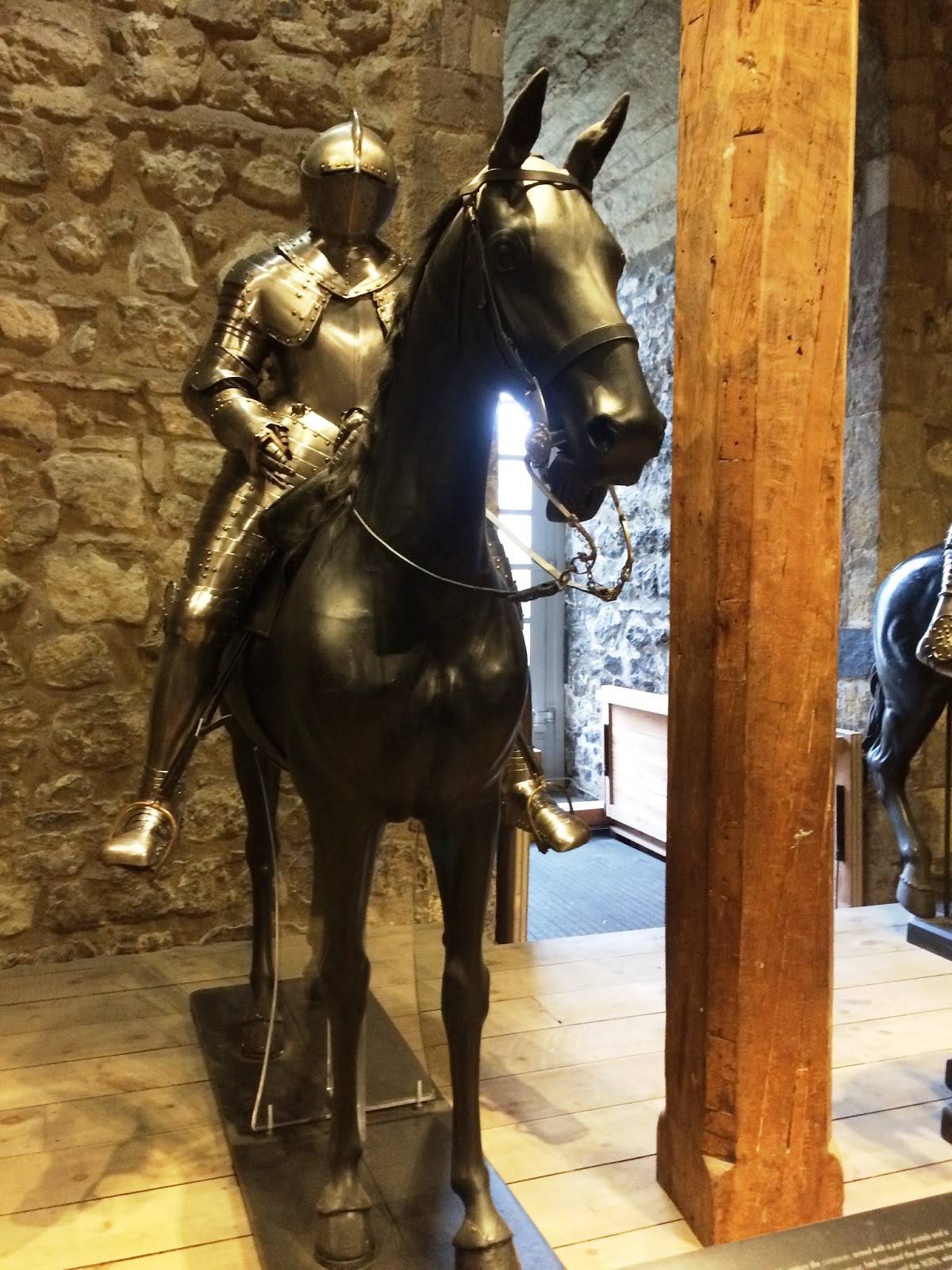
But in the timeline of English history, WWII is “just yesterday.” My perspective on "old" stretched considerably. The Tower of London, where Lynne and I spent several hours, was built after William conquered England in 1066. The Tower had various uses, including as a royal residence, but its infamy comes from having been a state prison from 1066 until 1956. I came home with many photos from the seemingly endless display of shiny, bestudded military armor worn by British soldiers and horses, dating back to 1535. Outside on the green, the Yeoman Warder pointed out the probable spot where Henry VIII had Ann Boleyn beheaded in 1536.

Just one of many examples of armor at the Tower of London 


Recognize this from Harry Potter?
 It is the actual dining hall at Christ Church College in Oxford
Speaking of Henry VIII, we also spent a day in Oxford, visiting Christ Church College, founded by Henry VIII’s alter rex (other king), Thomas Wolsey, in 1525. Walking through the dining room with walls crowded with oil portraits of former headmasters, our guide pointed out the image of red-hatted Cardinal Wolsey. Cardinal Wolsey was the first headmaster. Reportedly, he required his boys to speak Latin during meals.


Yet we were still in modern times, compared to the Roman Baths, in Bath, constructed during the Roman occupation of Britain beginning in 60 AD. Lynne and I walked on the worn stone pathways, around the green-yellow pools of hot mineral water, still bubbling up after thousands of years. We saw the plumbing and drainage system on the lower level, following the stream from its intake to the soaking pools to its final exit. Remnants of the temple of the goddess Sulis-Minerva were on display. The display cases included curse tablets, small pieces of lead inscribed with messages imploring the goddess to curse those who had wronged the author. We also had an upclose view of Roman artifacts a few days earlier in Cirencester. built over the Roman town of Corinium. Extensive and elaborate mosaics have been recovered and put on display in their excellent museum. Ironically, a local regimen of British soldiers marched through the streets of Cirencester as part of the town’s 900th birthday celebration on the day we visited the town.

But none of that is really old. OK, now go back another 2000 years, to 2000 BC. We went to the Blue Hills Tin Streams in Cornwall, where tin had been mined for 4000 years. Yes, think Poldark. We hiked down (and later back up!) a long steep hill to stand next to the stream which flows through the last remaining tin operation. The owner no longer employs female manual laborers (“Bal Maidens”) to” bust” rocks, but the midden of discarded rocks that rose from the hillside beside us gave witness to their work. He no longer mined the seam underground, but I could see the smudged and begrudging faces of the miners who did in a display of old photographs.

Abandoned buildings at tin mine in Cornwall 

And then I thought about Stonehenge, whose construction started in 3100 BC.

The human English history that I witnessed spans 5000 years, a greater defnition of the word "old" than I, living in North America, am used to seeing.  England, a country the same size as Oregon, bears witness to its history at every turn, and I had only taken a few of those turns.

I'm still not done with "How old is old?" Lynne and I are younger than Stonehenge but feel OLD (69 and 66 years in these bodies).

Before our trip, we had consoled ourselves that the other hikers on our Road Scholar trip would not put us to shame, since they would likely be our age or or even older. We were correct in that we were among the youngest members on the trip. As far as we could tell, the oldest was in his eighties.

But these oldsters were consistently passing us on the trails in the Cotswolds and Cornwall. I would hear a polite “On your left!” or I would sense someone breathing down my neck as I cautiously slowed to a crawl on a slippery down hill.

I would never have picked out my fellow Road Scholars as athletes. They looked like a typical group of well nourished, underfashioned American tourists, with their REI daypacks, nature colored rainsuits and collapsible hiking poles. They were not wearing spandex nor did they have Olympic medals around their necks, yet they inspired us to greater adventures.


This sculpture representing the legendary King Arthur sits high on the Cornish bluffs overlooking the Atlantic Ocean at Tintagel. I like the juxtaposition of the stone bluff, the Atlantic Ocean, and the semi-substantial figure of King Arthur.